Graceful Conversations About Death and Faith in Senior Communities

Death comes up more often when people have lived long enough to lose friends, siblings, spouses, and neighbours. That doesn’t make the topic easy. It just makes it more present.
In a senior community, one person might find deep comfort in the promise of heaven. Another might speak about reincarnation, returning to the earth, ancestor spirits, or simply the end of life with no religious frame at all. Some people pray every day. Some haven’t been inside a place of worship in decades. Some are carrying hurt from religion and would rather not talk about it.
So when death and faith meet in conversation, decorum matters. Not stiff manners. Not tiptoeing around every word. Just the kind of care that says, “Your beliefs matter, and so does our relationship.”

Why faith and death conversations can feel so tender
Talking about death is rarely only about death. It can touch grief, fear, regret, hope, family conflict, funerals, where someone wants to be buried, and what they believe happens next.
Faith can bring comfort. It can also bring tension.
Someone might say, “I know I’ll see my husband again.” To them, that may be a lifeline. Someone else might hear that and feel left out, unsure, or even pressured because they don’t share that belief.
One person might say, “Everything happens for a reason.” They may mean to comfort. But to someone grieving a painful loss, those words can land like a door closing.
That’s why these conversations need a softer approach. Good decorum protects the dignity of the person speaking and the person listening.
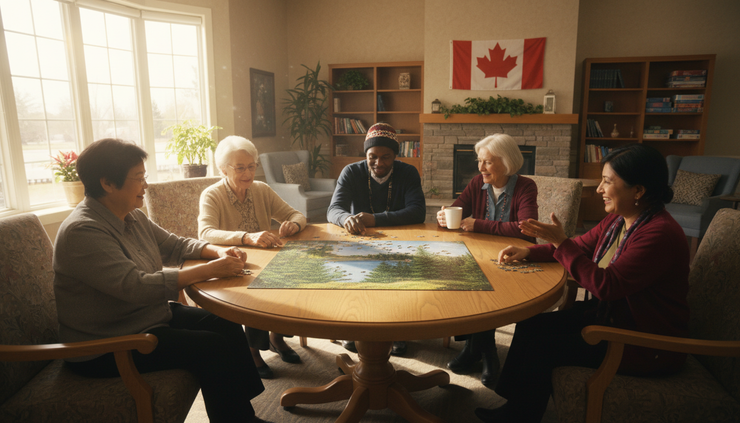
In Canada, senior communities often bring together people from many backgrounds. Christian, Jewish, Muslim, Hindu, Sikh, Buddhist, Indigenous spiritual, atheist, agnostic, secular, and mixed-faith families may all share the same dining room, activity calendar, or hallway. For Senior Citizens, Canada can be a place where long-held traditions meet new friendships every day.
That variety can be beautiful. It can also make casual comments more complicated than we expect.
Start by asking, not assuming
A gentle question can prevent a lot of awkwardness.
Instead of saying, “You must believe your wife is in a better place,” try:
“Do you find comfort in any particular belief right now?”
“Would it help to talk about your faith, or would you rather talk about memories?”
“What did your husband believe?”
“Is there anything you’d like honoured if your family plans a service?”
Questions make room. Assumptions can box people in.
Even if you know someone attends church, synagogue, mosque, temple, gurdwara, or ceremony, that doesn’t mean you know how they feel about death. Faith can change over a lifetime. Grief can shake certainty. Illness can bring old questions back.
The kindest route is curiosity without pressure.
A simple phrase helps:
“I don’t want to assume. What brings you comfort when you think about this?”
That sentence gives the other person the lead. They can go religious, practical, emotional, or quiet.
Share your beliefs without making them a measuring stick
It’s natural to speak from your own faith. If prayer, scripture, ritual, or spiritual hope has carried you through loss, you don’t need to hide that. The key is to speak personally rather than universally.
There’s a big difference between these two approaches:
“When my sister died, praying the rosary helped me feel less alone.”
“In my tradition, we light a candle and sit with the memory.”
“I believe I’ll see my family again one day.”
“You should pray the rosary. It’ll help you.”
“The right thing to do is light a candle.”
“You’ll see them again, whether you believe it or not.”
The first column shares. The second column pushes.
When people are talking about death, they may be more vulnerable than they seem. A strong statement can feel like correction, even when it’s meant as comfort.
Try using phrases like:
“In my experience…”
“What helped me was…”
“My faith teaches…”
“I know not everyone sees it this way, but I find comfort in…”
These phrases keep the door open. They let someone nod, ask more, or simply say, “That’s lovely,” without feeling cornered.

Be careful with comfort phrases that can sting
Most hurtful comments aren’t meant to hurt. They’re often said because silence feels uncomfortable.
When someone says, “My daughter died last month,” many people panic inside. They want to say something meaningful. They want to ease the pain. But grief doesn’t always need fixing.
Some phrases can feel dismissive, even if the heart behind them is kind:
“At least they lived a long life.”
“God needed another angel.”
“They’re in a better place.”
“You have to be strong.”
“Everything happens for a reason.”
“You should be over the worst of it by now.”
There may be settings where some of these words fit, especially if the grieving person shares the same language of faith. But if you’re not sure, choose something simpler.
Try:
“I’m so sorry.”
“I miss them too.”
“That sounds very hard.”
“Would you like to tell me about them?”
“I’m here with you.”
“I don’t know what to say, but I care.”
That last one is often enough. It’s honest. It doesn’t pretend to explain the loss.
There’s no perfect sentence for grief. A steady presence usually matters more than polished words.
Know when a conversation is too personal for the dining table
Senior communities are social places. Conversations happen over coffee, cards, exercise classes, craft groups, and shared meals. That can be lovely. It can also mean private subjects become public very quickly.
Religion and death can both stir strong feelings. Together, they can change the mood of a whole table.
Before going deeper, notice the setting.
A dining room chat may not be the place to debate:
who is “saved”
whether someone chose the correct funeral rite
whether cremation or burial is better
medical assistance in dying
whether suffering has spiritual meaning
which religion is true
family disputes about memorial services
These topics deserve care, consent, and privacy. They may also involve legal, medical, or family matters. If the conversation touches those areas, keep it respectful and encourage people to speak with the right professional, spiritual leader, or family member. This post is only general guidance, not medical, legal, or spiritual advice.
If a conversation starts getting heated, it’s fine to slow it down.
You could say:
“This sounds very personal. Maybe we should talk about it somewhere quieter.”
“I care about this, but I don’t want anyone here to feel put on the spot.”
“Let’s give this conversation a bit of breathing room.”
“We may see this differently, and I’d like us to stay kind.”
Changing the subject can also be an act of care. You’re not avoiding the topic. You’re protecting the people in the room.
Listen for grief underneath the theology
Sometimes a religious debate isn’t really a debate. It’s grief wearing armour.
Someone may say, “I just don’t understand how God could let this happen.” Another person may feel tempted to defend God, explain doctrine, or correct the question. But the person may not be asking for an answer. They may be saying, “I’m in pain.”
A more helpful response might be:
“That sounds like such a heavy question to carry.”
“I can hear how much you loved them.”
“Do you want to talk about what happened?”
“Have you had someone from your faith community to sit with you?”
When an elder adult, religion, death, and grief all meet in one conversation, the heart of the matter is often love. People are trying to make sense of losing someone, or of facing their own final years.
Listening for the feeling beneath the words keeps the conversation human.
If someone says, “I’m afraid of dying,” it may not help to rush in with certainty. Even deeply faithful people can be afraid. A gentle reply could be, “What part frightens you most?” That opens a real conversation.
Make space for people with no religious belief
Respect for faith also means respect for the absence of faith.
Some people don’t believe in God, souls, heaven, karma, rebirth, or an afterlife. Some prefer to talk about legacy, nature, memories, family, or the simple fact that life ends. That view deserves the same courtesy as any other.
Avoid treating non-religious people as if they’re missing something, especially when they’re grieving.
Instead of:
“Don’t you believe you’ll see him again?”
Try:
“What do you like to remember most about him?”
Instead of:
“I’ll pray you find faith before it’s too late.”
Try:
“I hope you feel surrounded by care right now.”
If you want to offer prayer, ask first. Many people will appreciate it. Some won’t. Both responses are okay.
You can say, “Would it be alright if I prayed for you?” If the answer is no, a gracious reply is, “Of course. I’ll be thinking of you.”
That small moment of respect can mean a lot.
Respect rituals, even when you don’t understand them
Death rituals carry deep meaning. They help families honour the person who died and care for the living.
Some traditions have specific prayers, washing practices, mourning periods, foods, candles, head coverings, sacred objects, songs, silence, or ways of handling the body after death. Some families gather quickly. Others wait. Some mourn publicly. Others stay private.
You don’t have to understand every ritual to respect it.
If someone shares a custom you’re unfamiliar with, try:
“Thank you for telling me.”
“That sounds meaningful.”
“Is there a way I can be respectful during that time?”
“Would you like company, or would privacy feel better?”
Curiosity is welcome when it’s gentle. Interrogation is not.
A good rule is to avoid asking questions that turn someone’s grief into a lesson for the room. If the person seems open, ask one respectful question. Then listen. If they give a short answer, let it rest.
Watch the urge to correct
Religious conversations can bring out the teacher in people. Someone quotes a verse differently. Someone describes a belief in a way that doesn’t match what you were taught. Someone says, “All religions are basically the same,” and you strongly disagree.
Ask yourself, “Does this need correcting right now?”
Sometimes it does. If someone is spreading fear, insulting a group, or pressuring a vulnerable person, a calm response matters.
But many small errors don’t need a public fix, especially in a tender conversation. Correcting can embarrass people and shift the focus away from grief.
If you do need to respond, keep it mild:
“I’ve heard that understood a bit differently.”
“My tradition sees that another way.”
“I don’t share that belief, but I respect that it matters to you.”
“I’d rather not debate this while we’re talking about someone’s loss.”
That last line is useful. Loss deserves protection.
When someone tries to convert the room
Most faith traditions include some desire to share truth, hope, or comfort. There’s nothing wrong with speaking warmly about what you believe. Trouble starts when sharing becomes pressure.
Signs that a conversation has crossed the line include:
someone won’t accept a polite “no”
grief is used as a chance to persuade
a person implies others are doomed or lesser
someone targets people who are ill, lonely, or frightened
the same message keeps coming up after others look uncomfortable
If you notice this, you can be kind and firm.
Try saying:
“I know this matters to you. I don’t think this is the right moment to press people.”
Or:
“Let’s keep this a conversation, not a sermon.”
Or simply:
“I’m going to step away from this topic.”
You don’t need to match intensity with intensity. Calm boundaries keep the peace better than sharp replies.
Talk about your own wishes before there’s a crisis
One of the most loving things a person can do is tell trusted family or friends what matters to them before they’re too ill to explain it.
This might include:
whether you want religious readings, music, or prayers
whether you prefer a service, memorial, visitation, graveside gathering, or no formal event
who should be contacted from your faith or cultural community
whether certain rituals should be observed
what kind of language feels comforting or unwelcome
how you’d like people to remember you
These talks don’t have to be gloomy. They can bring relief. Families often struggle less when they know what the person wanted.
The same courtesy applies in community life. If a friend says, “When my time comes, I don’t want a big fuss,” listen. If another says, “I hope someone sings hymns,” listen to that too.
Death planning is personal. Respect looks different for each person.

Apologize quickly when you miss the mark
Even with care, people sometimes say the wrong thing. That’s life. Maybe you assumed someone shared your belief. Maybe you made a joke that landed badly. Maybe you talked too much because you were nervous.
A short apology is usually best.
Try:
“I’m sorry. That came out wrong.”
Or:
“I didn’t mean to make you uncomfortable.”
Or:
“Thank you for telling me. I’ll be more careful.”
Then stop. Don’t over-explain. Don’t make the other person comfort you. A clean apology helps the relationship recover.
The same goes when someone corrects your name for a ritual, holiday, or faith practice. If you mispronounce or misunderstand something, accept the correction with grace. Most people don’t expect perfection. They appreciate respect.
A simple guide for graceful conversations
When death and faith come up, these habits can help:
Ask before offering prayer or religious advice.
Consent keeps a kind gesture kind.
Speak from your own experience.
Personal stories invite connection without pressure.
Let grief be complex.
A person can have faith and still feel fear, anger, or doubt.
Respect silence.
Not every pause needs filling.
Avoid ranking beliefs.
A shared lounge or dining table isn’t the place to decide whose faith is best.
Protect privacy.
Some stories are not meant for the whole room.
Choose relationship over winning.
Being right matters less when someone is hurting.
The grace we give becomes the community we live in
Conversations about death and faith will keep happening. They should. These subjects are part of being human, especially later in life when memories are long and goodbyes become more frequent.
The goal isn’t to make every conversation perfectly safe or perfectly worded. That would be impossible. The goal is to make them more caring.
A graceful conversation leaves room for belief, doubt, prayer, silence, tears, humour, memory, and mystery. It lets a person speak about what gives them comfort without turning that comfort into a rule for everyone else.
When in doubt, slow down. Ask gently. Listen longer than you speak. Let kindness lead the way.


Comments